Skip to content
Asciilands
Chapter 03World

Eleven kinds of land, one material each

The map is one continuous world split into regions, and each region hides one thing you cannot reliably get anywhere else. Read it forwards to plan a trip, or backwards to answer “where do I find quartz?”.

Checked22 October 2026build ca54ab855359

01How the map works

One shared world, walked rather than loaded

There are no loading screens between regions. You walk to an edge and the world continues, with a hint naming the region you are about to enter.

Deposits hold a few units and slowly refill, so a region is a place you return to rather than a node you exhaust. Some regions have none of a material at all, which is what makes trade and travel worth doing.

Finding a new material does two things: it reveals every recipe that uses it, and it adds a Journal discovery. Exploration is therefore a crafting upgrade, not a side activity.

02Regions

11 regions, in the order you meet them

The order is a guide to progression, not a map direction. You can walk into the Volcanic Wastes on day one; you just will not have the pickaxe for it.
01

Forest

The ground the tutorial starts you on: trees, fiber and enough cover to lose a wolf. Most first camps end up here.

  • Glowcap — A second route to a Mend inscription

    The caps only open between 18:00 and 06:00 game time. A daytime search finds nothing.

Fiber plants here carry berries, so a fiber run is also a food run.

02

Plains

Open, easy to cross and easy to be seen in. The quietest place to learn the camera without a tree in the way.

  • Quartz — Wayfinder Lens and most inscriptions

Quartz is what reveals the lens recipe, and the lens is what makes the rest of the map readable.

03

Highlands

Where the metal age begins. Copper is shallow enough for a stone pickaxe; iron is not.

  • Copper Ore — Copper ingots, then bronze

    A stone pickaxe is enough.

  • Iron Ore — Iron ingots

    Needs a bronze pickaxe or better.

Highland streams carry more tin than lowland water, which makes them the best place to pan.

04

Limestone Karst

The only place tin can be mined rather than panned, and the best source of bulk masonry.

  • Tin Ore — Tin ingots, then bronze

  • Limestone — Four cut stone from two limestone

If you found karst early, you can skip the panning tray entirely and go straight to bronze.

05

Cypress Swamp

Slow going, but it hands you iron without touching a Highland deposit.

  • Bog Iron — Iron ingots, same as ore

    The smelt takes five seconds longer.

Two bog iron per ingot. Bring a bronze pickaxe and a lot of charcoal.

06

Savanna

Open grass and acacia. The most efficient charcoal in the game grows here.

  • Acacia Resin — Three charcoal from two resin

    Better than burning logs, which give one charcoal from two.

07

Desert

Heat, distance and gypsum. A good place to build if you want nobody nearby.

  • Desert Gypsum — Three cut stone from two gypsum

Water is the constraint here, not wood. Fill your pack before you cross.

08

Tropical Coast

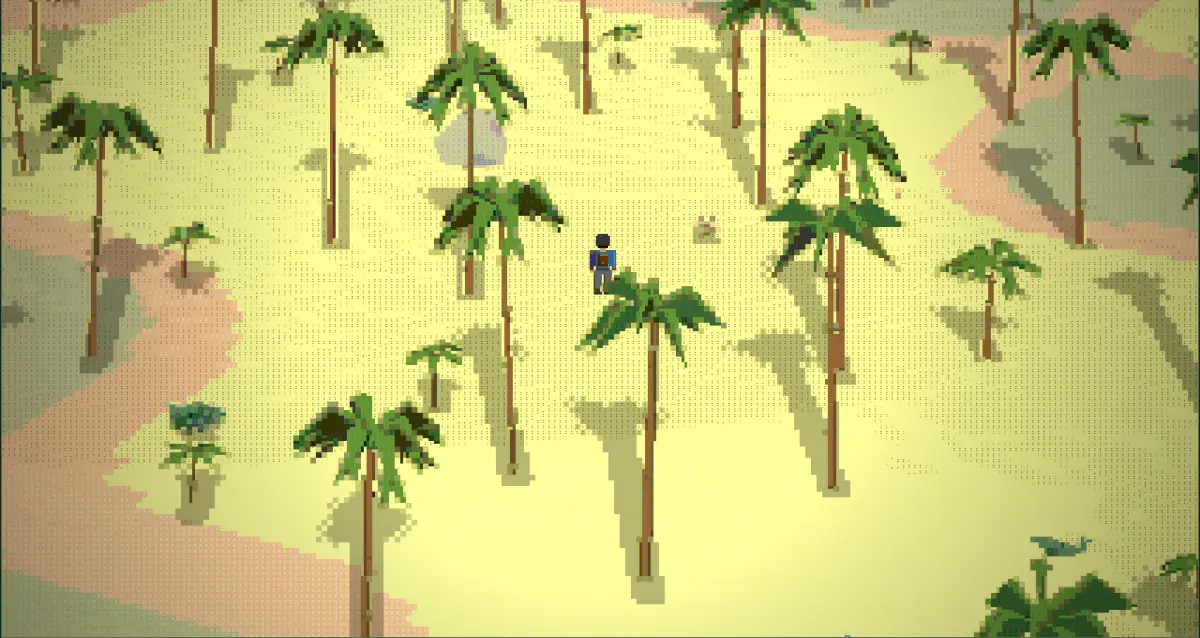
Palms, shallow water and pearls — which is the cheap route to a Wayfinder Lens.

  • Pearl — A lens without any silver

    Two pearls and one quartz.

  • Sea Salt — Three cooked meat from one campfire load

09

Bamboo Forest

Sticks without logs. Worth a detour if you are building and short on handles.

  • Bamboo Culm — Six sticks from two culms

10

Snowy Alpine

Cold, high and full of frost crystals, which the stonecutter turns into quartz.

  • Frost Crystal — Two quartz from two crystals

Quartz is the bottleneck on both lenses and inscriptions, so this is a more useful region than it looks.

11

Volcanic Wastes

Lava, obsidian and emberstone. The only region that supplies its own forge fuel.

  • Obsidian — A stone sickle with no stone

  • Emberstone — Fuel for a campfire or smelter

Obsidian is the one material that lets you make a gathering tool from nothing but the region you are standing in.

03Reverse lookup

Where each material is

Every material in the region set, alphabetically, with the region that supplies it and what it is for.
Each regional material, the region it comes from, and what it is used for
MaterialRegionUsed for
Acacia ResinSavannaThree charcoal from two resin
Bamboo CulmBamboo ForestSix sticks from two culms
Bog IronCypress SwampIron ingots, same as ore
Copper OreHighlandsCopper ingots, then bronze
Desert GypsumDesertThree cut stone from two gypsum
EmberstoneVolcanic WastesFuel for a campfire or smelter
Frost CrystalSnowy AlpineTwo quartz from two crystals
GlowcapForestA second route to a Mend inscription
Iron OreHighlandsIron ingots
LimestoneLimestone KarstFour cut stone from two limestone
ObsidianVolcanic WastesA stone sickle with no stone
PearlTropical CoastA lens without any silver
QuartzPlainsWayfinder Lens and most inscriptions
Sea SaltTropical CoastThree cooked meat from one campfire load
Tin OreLimestone KarstTin ingots, then bronze
Ambernot namedNeeded for Starburst and Nova. The Field guide lists it as a regional find without naming the region.
04Travel

Reading the map

The atlas is the closest thing the game has to a quest log: it tells you what is nearby, what is wildlife, and — with a lens — what you have walked past.
Map controls and markers in Asciilands
ControlWhat it does
MOpen the local map; choose World for the atlas.
DragPan the atlas.
ScrollZoom the atlas.
peach diamondWildlife.
gold markerA hidden find, visible only while you carry a Wayfinder Lens.
region edgeWalk into it to travel. A hint near the edge names the next region.

The only real choice at character creation

Start together

Places you near other settlers. When a starting region is busy, new arrivals are spread into nearby woodland and plains instead.

Start farther away

A remote patch of forest or plains, more often coastal. Fewer neighbours, fewer landmarks.

You can meet friends either way: Social (N) lists which region each of them is in.

Palm trees on a sandy coast in morning light, rendered in text characters.
Morning on a tropical coast — the cheapest route to pearls. Promotional screenshot © Asciilands.
05Two things worth planning around

The lens, and the sky

One is a permanent upgrade you should get as soon as you can. The other is a timed event that decides whether star iron is reachable at all.

Wayfinder Lens

Marks the five nearest hidden finds on your map in gold.

  • 2 Quartz + 1 Silver Ingot + 1 AmberThe one the recipe list shows first.
  • 2 Pearl + 1 QuartzNo silver and no smelting, if you have been to a tropical coast.
  • 1 Pristine Trophy + 2 Quartz + 1 Silver IngotNeeds a hunt drop.

It never wears out, so one is enough for the rest of the character's life.

Meteorites

Meteorites fall in the wilderness days apart. A streak across the sky is the only warning.

A glowing crater holds three Star Iron and disappears once it is mined out.

Mining Star Iron needs a steel pickaxe.

  • Smelt one Star Iron with charcoal for two steel ingots.
  • Forge Star Iron heads — but they only reach full durability at masterwork grade.
06Servers

Two realms, one rule

Pick the one nearer you. There is no transfer and no second character slot on a different realm.

eu

Europe

110 players

na

North America

110 players

The login screen shows how full each server is. A full server puts you in a queue, and supporters queue separately.